
Israel's Rabin Medical Center Develops Breakthrough Genetic Testing

The new model presents a more accurate test for hereditary and genetic risks
In a groundbreaking research project, Israel's Rabin Medical Center streamlines and redefines genetic testing to increase accuracy and rule out "false red flags".
Genetic testing has become a critical part of assessing potential hereditary disease risk when families are contemplating having children. Knowledge of this potential risks are vital to ensuring a healthy future for mother and child.
Israel's Rabin Medical Center has developed a more accurate genetic testing algorithm that is greatly more effective within communities that have higher degrees of genetic likeness, like Jews. Led by Professor Idit Maya, acting director of the Genetics Institute at Rabin Medical Center and head of the research team recently spoke to The Times of Israel:
“Measuring the genetic proximity of Jewish couples using the same yardstick as American couples is a mistake. Some level of genetic relatedness is expected among Jews, as the result of generations of marrying within the group. If we don’t take that into account, we end up with false red flags that can lead to heartbreaking decisions, including unnecessary terminations.”
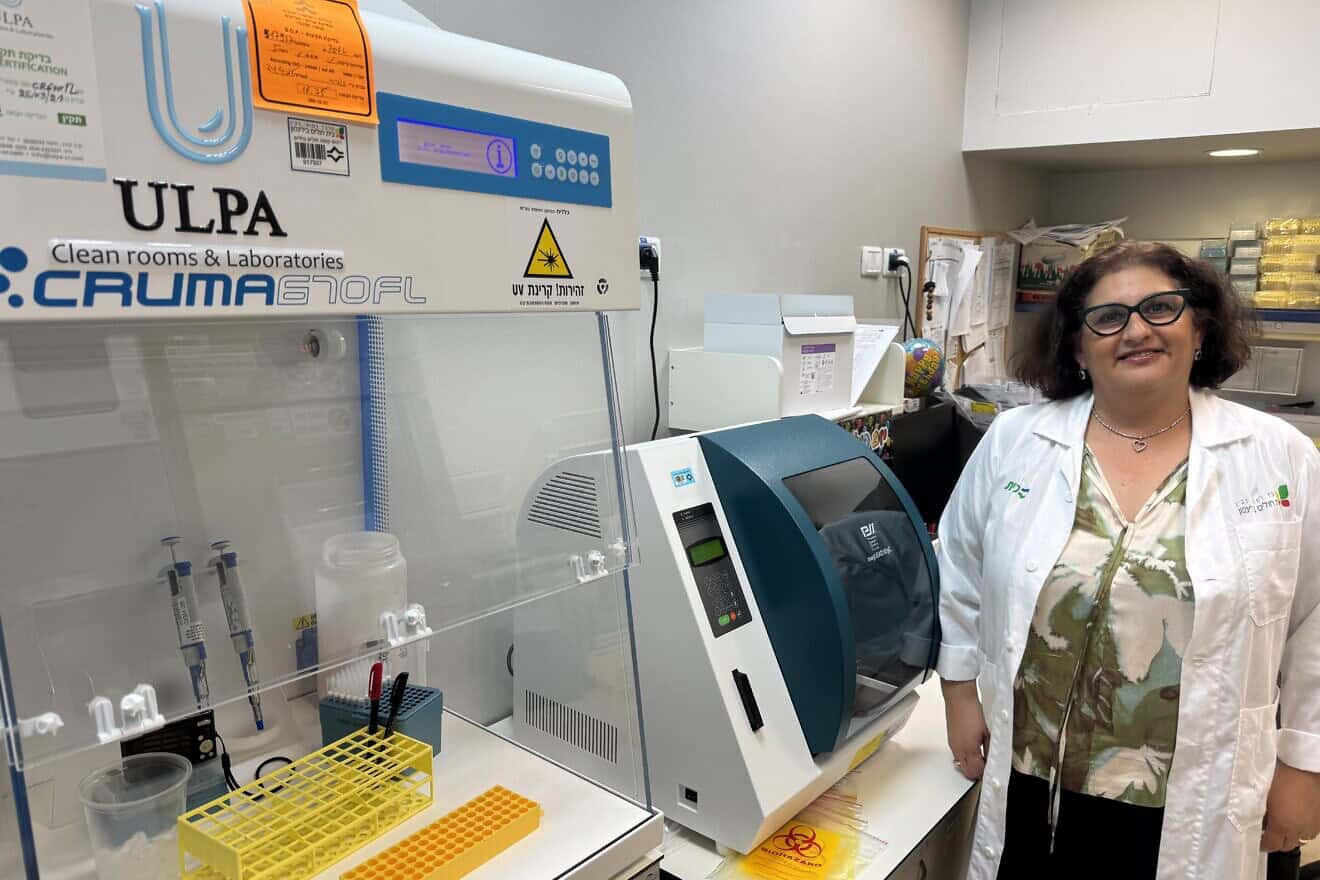
Prof. Idit Maya in her laboratory at Rabin Medical Center. (Courtesy/Howard Blas)
Such developments are monumentally life-changing. Professor Maya worked with Professor Lena Sagi-Dain, chair of the Israeli Society of Medical Genetics to collect 15,000 genetic samples from Israelis that included blood and embryo data.
The samples were grouped by the 16 ethnic backgrounds in Israel, which include Ashkenazi Jews, Sephardi Jews from North Africa and the Middle East, Jews from Ethiopia, Christian and Muslim Arabs, Bedouin, Druze, and Circassians. These samples were the key to assessing the genetic profile of each population and thus creating a specific algorithm for that community.
This infinitely more accurate algorithm is customized to the population, and reduces the potential false-positives that a broader more generic design risks having.
Professor Maya was ebullient at the prospect of this critical improvement. “Our model will reduce unnecessary concerns, prevent false alarms and in some cases, even save pregnancies that might otherwise have been terminated. It’s a meaningful shift for the benefit of our patients.”