
Israeli Scientists Spice Up Chronic Pain Management
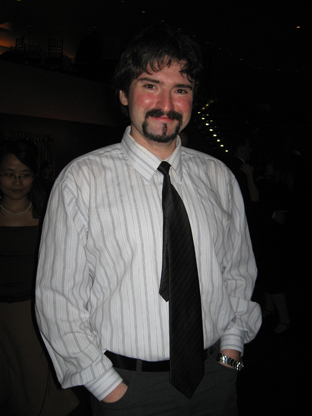
Dr. Alexander Binshtok of Tel Aviv University's Sackler School of Medicine
This article is reprinted with the permission of ISRAEL21c
Ask people what they fear most about any medical procedure and they'll tell you it's not the operation itself but the pain that goes with it. Anaesthesia also has its drawbacks with side effects like loss of consciousness, wooziness and numbness.
"The holy grail of any local anaesthetic treatment is to stop pain without causing any other effects," says Dr. Alexander Binshtok of Tel Aviv University's Sackler School of Medicine. That noble goal may now be within reach with a new approach based on the common chili pepper.
Chili is credited with a variety of healing properties, such as easing the digestive system and clearing congestion. But by joining capsaicin, the substance that makes chili hot, with QX-314, a chemical derivative of the common local anaesthetic lidocaine, Binshtok and his colleagues are able to target selective pain fibers and effectively block the pain.
"We have demonstrated that this method blocks painful stimuli without any side effects," says Binshtok.
An end to epidurals
The new approach has the potential to change multiple applications of local anaesthesia, from the dental office to the delivery room. Epidurals are one example of a pain management technique that will be revolutionized by this red-hot medication.
Epidural anaesthesia compromises body function to the point where a woman cannot walk and her ability to "push" during labor is limited. With the new pain drug, she will be able to do both painlessly, says Binshtok, thus eliminating the need for an epidural.
Then there is the problem of the pain suffered by millions of Americans with chronic inflammatory diseases, neurogenic diseases, or cancer. "Many people suffer from chronic pain but we don't understand why," says Binshtok. "Nobody knows what turns normal or protective pain to chronic or non-protective pain, and we don't yet understand the agents or molecules that turn normal into chronic pain."
Binshtok explains that some lucky people carry a specific genetic variance that makes them more resistant not only to pain but to the development of chronic pain after surgery. Understanding this mechanism could be the key to solving pain problems.
Researching pain
As a post-graduate student, Binshtok was part of the research team from Massachusetts General Hospital (MGH) and Harvard Medical School (HMS) that succeeded in selectively blocking pain-sensing neurons in rats without interfering with other types of neurons, giving hope that someday there will be an anaesthetic that blocks pain but doesn't paralyze or numb the patient.
This fall, Binshtok will be directing his own pain management lab at Tel Aviv University. His work will study what happens on the periphery when painful stimuli attack the skin, and will attempt to understand "how the process is analysed by pain fibers, and then how it is processed by the neurons in the spinal cord" which modify pain signals.
And while he warns there is still more testing and research to be done before a "magic bullet" miracle drug is produced, he is confident that it will come.
For more than 3,000 stories about how Israel adds value to American life, visit www.israel21c.org.
Related Articles
A Gift Inaugurating the David Baruch Day Care Floor
On the evening of May 7th, 2006, David Baruch from Fort Lee,
New Jersey, accompanied by his three children Assaf, Sharon
and Karen, officially inaugurated the David Baruch Day Care
Floor at the Davidoff Cancer Center.
A Dedication of Love
After the tragic loss of their
son Chuck Trobman to cancer
at only 25 years old, Phyllis,
Malcolm and their son Les
became acutely aware of the
struggles faced by cancer victims.
Israeli Hospitals Destroy Tumors With Liquid Nitrogen
IceCure Medical, an Israeli company developing a minimally invasive medical device for treating tumors, announced that it will start offering its technology in Israel in upcoming weeks.